On UTIs, Parable of the Sower, and god
In my first semester at college, I contracted a UTI, fractured my foot, and got food poisoning from Crossroads dining hall. I am not sure what I ate, how I hurt myself, or what germs entered my body. However, this sense of confusion, an inability to trace my ailments to a root cause, has infiltrated my academic pursuits, too. I was never good at math in high school, but I got an A+ in calculus this fall. I was always good at English, but got a B+ on my first reading and composition paper. I was lost and confused, limping to and from class with my black boot, icing my foot intermittently, taking antibiotics strictly. That semester, I read Octavia’s Parable of the Sower, and some of my confusion seemed to ebb away.
On a Wednesday afternoon, I found myself nestled between a metal picnic table, a concrete bench, and looming trees billowing in the wind as I finished the final chapters of Butler’s novel. Parable of the Sower serves as a vision of California’s future: ravaged by inequality, social collapse, and exacerbated by the climate crisis. Where Butler uses social erosion as a warning, she also offers a new religion as a blueprint for spiritual and communal rebirth. In other words, while the book is aggressively depressing, it is equally uplifting and transcendent. It felt, it feels, prophetic. Butler has reshaped faith as something malleable, cultivated through precise language and change; belief has therefore transformed into an act of becoming, a process that parallels my own efforts to root meaning in all things uncertain.
For as long as I can remember, I have not believed in a god. Though my parents were raised in the church and I attended the occasional Sunday service with my grandmother, I found little to no connection with this all-knowing, all-powerful being that people had such devotion for. Did god give me a UTI, fracture my foot, and poison my food?
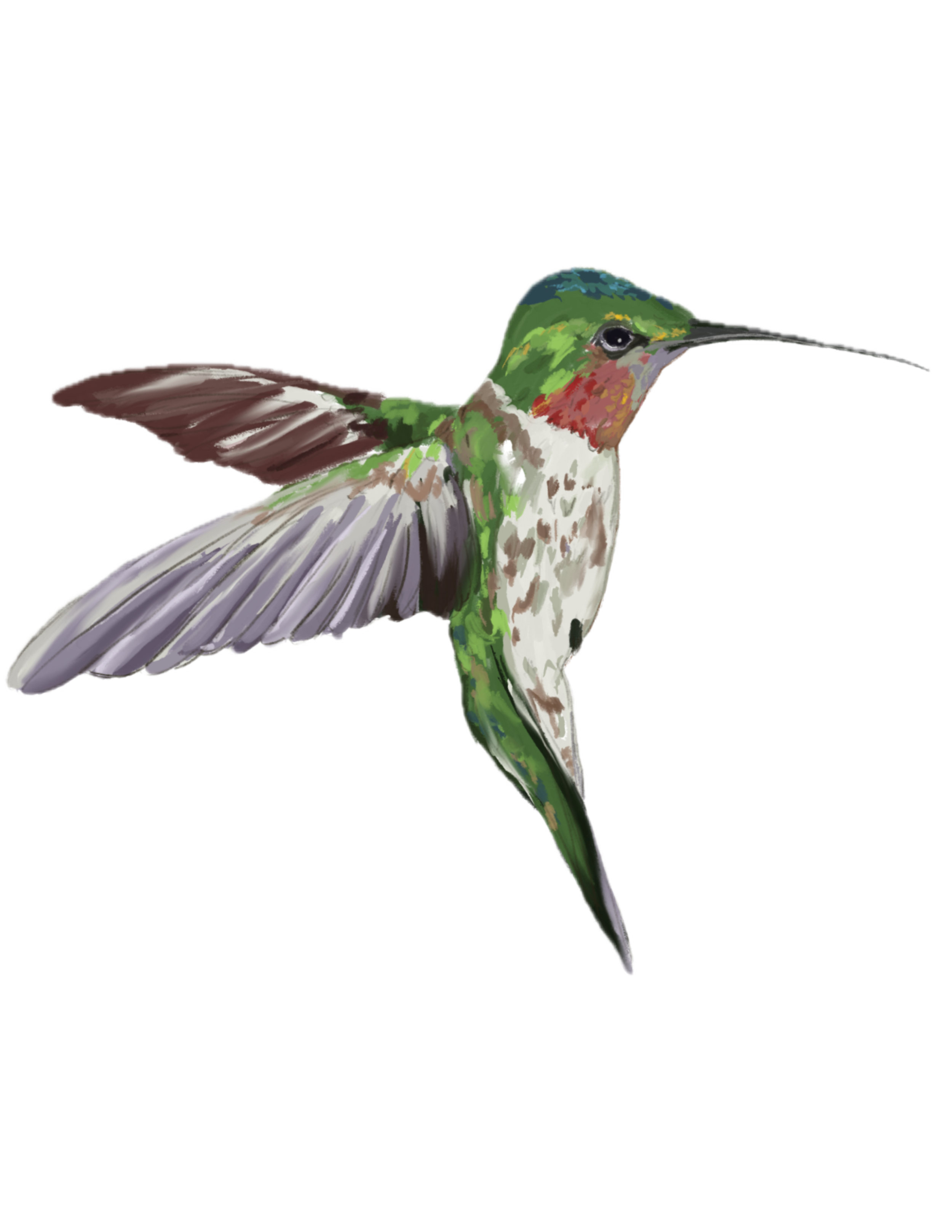
If I have met god, I’ve met him (them/it/her?) plainly, like when I’m having a bad day, and it starts pouring rain. I see her (them/it/him?) sneakily like through the little hummingbird that visited my dorm room window a few times in October. But I wonder if this is not an act of god and rather the powers of the universe at play. I think I often reject formal religion because I am uncomfortable with common conceptions about heaven and hell. The idea that one must die to reach heaven implies, to me, that life cannot be heavenly or enjoyed entirely. Lauren Olamina, Parable of the Sower’s protagonist, says “My God doesn’t love me or hate me or watch over me or know me at all, and I feel no love or loyalty to my God. My God just is,” and explains that her heaven really does exist, and “you don’t have to die to reach it” (Butler 22-25). I know heaven exists on Earth because I have seen it:
I have gone to the beach
I have felt the rain on my skin
I have lived through the summer
I have made friends
I have been visited by a hummingbird
I have seen trees that have been alive longer than anyone I have ever met
Maybe what I am coming to understand about UTIs and god, is that it is not always meant to be explained. That perhaps searching endlessly for meaning is futile and exhausting. If Lauren Olamina and Octavia Butler have taught me anything, it is to stay curious and accept change. Perhaps the only constant I can count on is myself and my ability to stay curious in search of god or meaning. For a malleable god might be one worth believing in. And my god, if I am to find one, will just be. Amen.
Butler, O. E. (1993). Parable Of The Sower. Grand Central Publishing.